
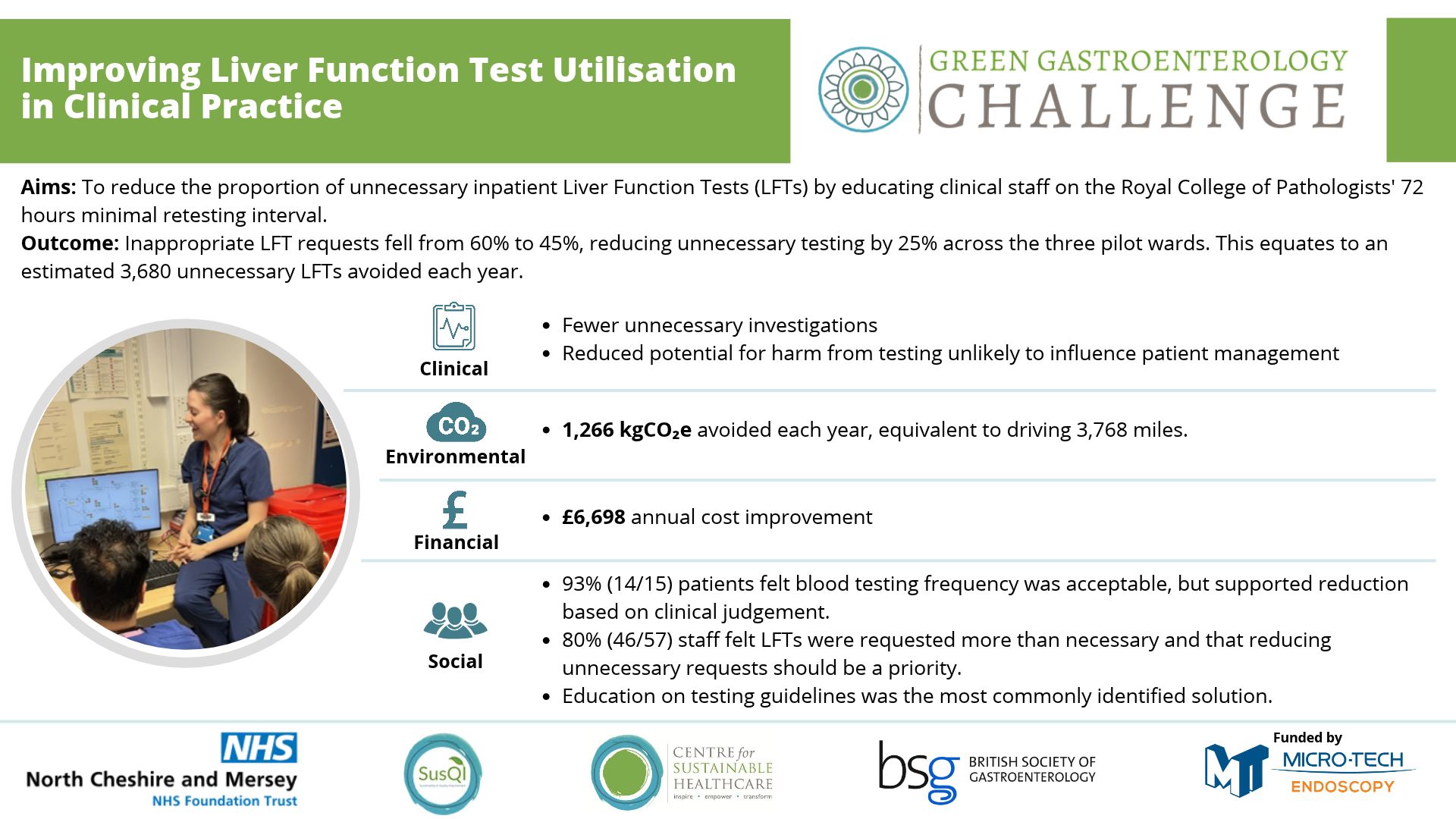
Setting / patient group: Inpatient wards
Warrington Hospital, North Cheshire and Mersey NHS Foundation Trust. The project was piloted across the three inpatient wards with the highest volume of liver function test (LFT) requests: the Acute Medical Unit (AMU), gastroenterology ward (A5), and endocrinology and diabetes ward (A2).
Issue
The project addressed the overutilisation of inpatient liver function tests, particularly repeat testing at intervals shorter than the 72-hour minimum retesting interval recommended by the Royal College of Pathologists. Baseline review of 300 LFT requests found that 60% were inappropriate.
Intervention
The team completed a baseline audit of LFT requesting practices, mapped the LFT requesting and analysis process, and undertook staff engagement through interviews and surveys. A 10-15 minute educational intervention was then delivered to doctors, nurses, physician associates and advanced clinical practitioners, focusing on the burden of unnecessary testing and Royal College of Pathologists minimum retesting interval guidance. Teaching was delivered through Foundation Year 1 teaching sessions, ward huddles and nursing education sessions, and reinforced with educational posters displayed on participating wards.
Outcomes
The proportion of inappropriate LFT requests decreased from 60% to 45%, representing a 25% reduction in unnecessary testing, or approximately 3,680 tests per year.
Clinical: Avoiding these tests reduces the potential for harm associated with unnecessary investigations and reduces testing that is unlikely to provide meaningful information to support patient management.
Environmental: A 25% reduction in inappropriate testing would avoid 1,266 kgCO₂e per year across the three wards.
Financial: A 25% reduction in inappropriate testing would reduce costs by £6,698 per year across three wards.
Social:
· 15 patients were surveyed. 14 participants agreed the number of blood tests performed on the wards was mostly or completely acceptable, however more than two-thirds of participants responded positively when asked if they would support doctors in reducing unnecessary testing, citing reduced NHS costs, decreased staff workload, and improved patient comfort as the main perceived benefits.
· Regarding repeat blood testing, Eight participants reported no issues, while six reported bruising, three reported pain and discomfort, and two reported anxiety. These responses were not specific to LFTs.
· 57 staff were surveyed. 80% believed LFTs were requested more often than necessary, almost three-quarters agreed reducing unnecessary requests should be a departmental priority, and most suggested education on testing guidelines as a key solution.
Further improvements:
The project has initiated discussions between Warrington Hospital's Gastroenterology and Biochemistry departments regarding a review of the Trust's LFT panel. Proposed changes include aligning testing with BSG guidance by removing AST and total protein from the standard panel and requesting them only when clinically indicated. This could avoid £5,400 and 30,240 kgCO2e per year across North Cheshire and Mersey NHS Foundation Trust.
Key learning point
Education on retesting guidelines was well received and demonstrated effectiveness in improving LFT requesting practices. However, delivering teaching sessions proved challenging because of patient acuity, workload, staff turnover, shift patterns and annual leave. The project found that clinical staff are willing to engage in initiatives to improve the quality of care and value opportunities for further education, but that protected time is required to support educational interventions and that education should be recognised as an investment in improving healthcare quality.
 Download resource -
Please log in or sign up to comment.